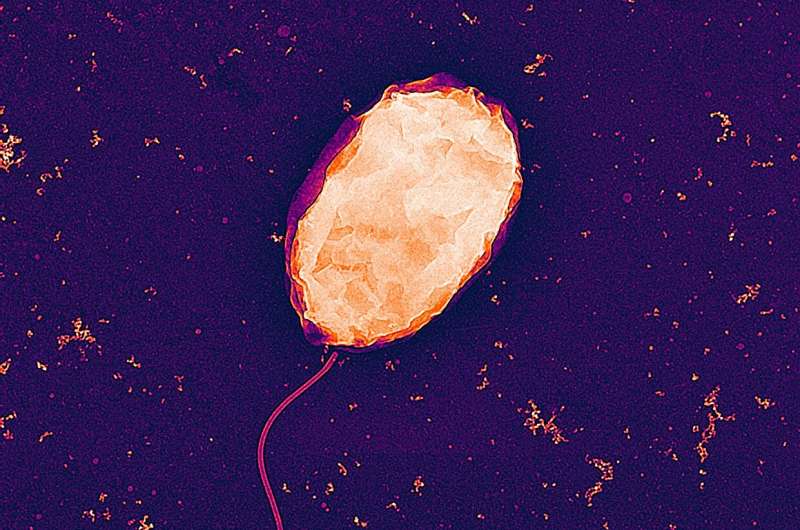
What if I told you, a tiny, hard-working bacterium—which weighs one-trillionth of a gram—could be the key to processing rare earth elements in a way that is eco-friendly and sustainable? Pretty impressive, right?
In a new study, Cornell scientists demonstrate that genetically engineering this bacterium could revolutionize the purification of elements found in smartphones, computers, electric cars, and wind turbines. Not only that, but it could also have a positive impact on global economic supply chains.
The bacterium Vibrio natriegens offers a sustainable method—called biosorption—to extract valuable and needed elements, rather than using older, polluting, solvent-heavy methods.
The groundbreaking Cornell research, “Multiple Rounds of In Vivo Random Mutagenesis and Selection in Vibrio Natriegens Result in Substantial Increases in REE Binding Capacity,” was recently published in ACS Synthetic Biology.
“Traditional thermochemical methods for separating lanthanides are environmentally horrible,” said Buz Barstow, assistant professor of biological and environmental engineering in the College of Agriculture and Life Sciences, the corresponding author. “It’s difficult to refine these elements. That’s why we send rare earth elements offshore—generally to China—to process them.”
Doctoral student Sean Medin and Anastacia Dressel ’24 led the research to genetically engineer a strain of Vibrio natriegens to increase its ability to biosorb—or extract—rare earth elements.
The researchers changed the genome of Vibrio natriegens with a plasmid called MP6, which introduces errors into the genome and then screened the mutants for increased biosorption of rare earth elements. “Given the ease of finding significant biosorption mutants, these results highlight just how many genes likely contribute to biosorption,” he said, “as well as the power of random mutagenesis in identifying genes of interest and optimizing a biological system for a task.”
Rare earth elements play a critical role in modern society. They are found in computers, batteries, and clean energy technologies. In early 2021, the White House ordered an assessment that later found an over-reliance on foreign sources and adversarial nations processing the elements, posing national and economic security.
Vibrio natriegens—and a growing array of bacterial tools—offer a way to safely bring rare earth elements and minerals processing back to the U.S. For example, at the Mountain Pass rare earth element mine in California, near the tip of the Nevada border, biological processing could bring this mine back to robust domestic productivity, Barstow said.
“This new work gives us a shot to leapfrog thermochemical methods,” Barstow said. “We can engineer this and other bacterium and because we don’t need to purify proteins, we can operate this kind of system much more cheaply than competing biological processes.”
The U.S. no longer has expertise in thermochemical processing methods, Barstow said. “For purifying rare earth elements, we’re now left with competing green methods,” he said. “So even if we wanted to hold thermochemical methods, we probably couldn’t. We no longer know how to do it.”
Barstow said, “We are being forced to innovate our way out of this problem.”
n
More information:
Sean Medin et al,
