Nathan East is not just upholding the strong groove tradition established by studio bassists – he’s raising the bar as a soloist. His undeniable flair for blues and bebop-drenched improvisation has led to him being awarded solos in unlikely places in various pop, rock, and R&B settings. A prime example is his classic solo on Our Love, from Al Jarreau’s 1985 concert video Al Jarreau Live in London.
East’s melodic 16-bar solo, coupled with frequent cable and PBS airings of the Live in London video, has since inspired many band-leaders to feature bass solos on pop ballads. “Al loved the offbeat nature of having the bass guitar play a solo in the middle of his ballad, so it became an established part of the show. I knew we were recording both the Live in London album and the video that night, but I didn’t plan anything for the solo; I just tried to be as tasteful as possible. This song has a lot of II-V chord changes, and I always like to let people know bass players can play through changes just like a horn player or a guitarist. If you listen to truly great soloists isolated from their accompaniment, you can hear the changes through the notes they play. I tried to keep that in mind.”
As the solo begins, East uses ascending and descending arpeggios to state his first theme; the III-VI-II-V chord progression indicates an A major tonal center, which shifts to Gb major, and then to F# minor, before cycling back to A major. It’s East’s ability to smoothly connect these key centers with common tones that gives the solo its flow.
As the chords from the first eight bars repeat, East plays a repetitive three-note figure that he resolves before using a similar rhythmic motion to segue to the next tonal center. Here, the descending triplets feel almost like an exhaled breath before a rapid, ascending Bmaj7 arpeggio.
On the next pickup, East restates his original F#m7 theme; he uses slightly different notes, but the effect is the same. The slowed-down meter and high note choices serve to create the solo’s climax. The solo ends on the held E, while East eases back into his bassline in preparation for the return of the lead vocal.
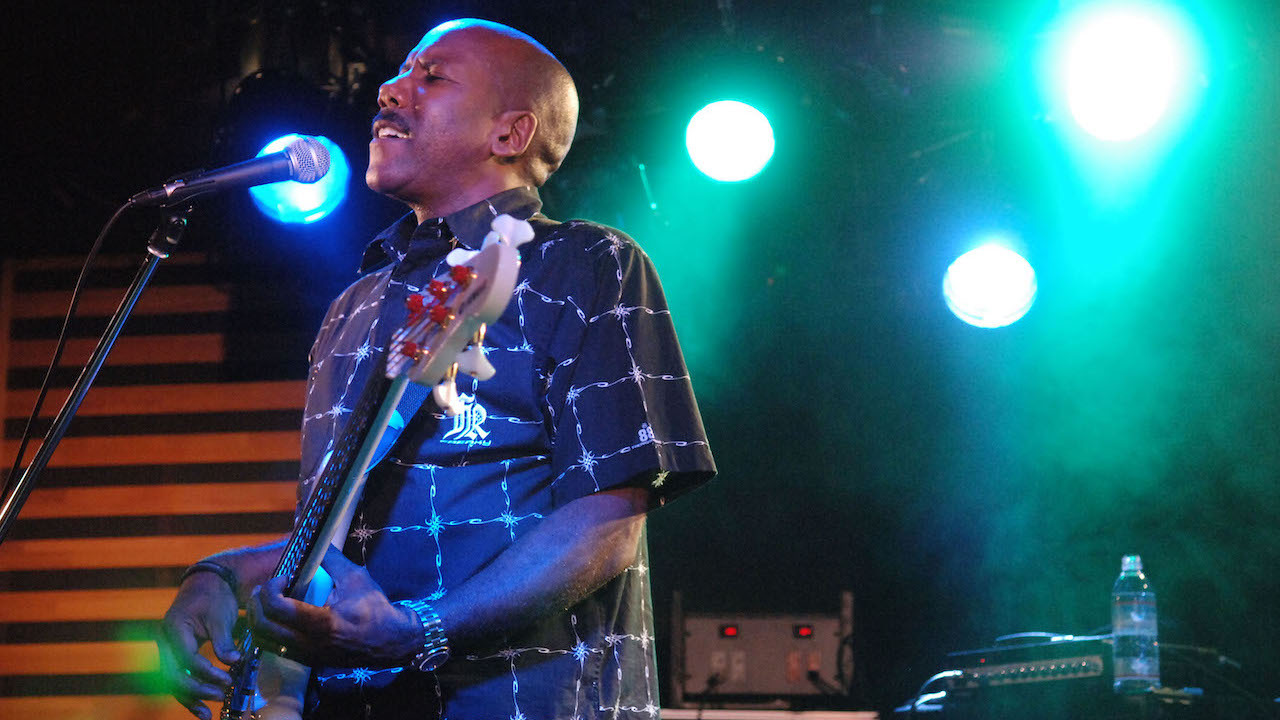
(Image credit: Getty Images)
A key to East’s overall melodicism is his preference for singing what he plays, either to himself or in a soft voice – a common device used by jazz soloists. “I always try to play from the heart, and singing is a natural connection. Your phrasing and melodies roll off the tip of your tongue when you sing. l would advise other bassists to do some practicing away from the bass; just sing and let it come from within.
