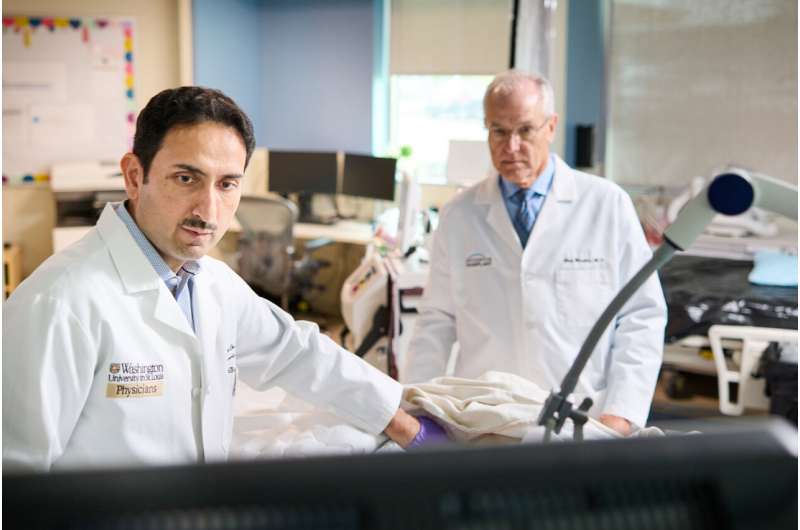
Donated hearts are routinely treated with thyroid hormones in hopes of preserving their function and increasing the availability of organs for transplantation. However, a recent study led by researchers at Washington University School of Medicine in St. Louis and Mid-America Transplant in St. Louis found that this practice is not effective and may even cause harm.
The study was published in The New England Journal of Medicine on November 30. “There have been very few studies of what really works in terms of preserving organ function for donation – and with a shortage of donor organs for transplantation, it’s critical to do what we can to preserve organs and save lives with them,” said Raj Dhar, MD, a professor of neurology at Washington University. Dhar is the corresponding author on the paper and led the clinical trial with Gary Marklin, MD, the chief medical and research officer at Mid-America Transplant.
The researchers aimed to determine whether intravenous thyroid hormone would result in more hearts being transplanted. This practice is used on thousands of organ donors each year, but has never been rigorously studied. The study found that it has no benefit and may cause harm. “Our findings tell us we should halt this practice,” Dhar said.
When patients are declared dead according to neurologic criteria, their organs can be donated for transplantation. Deceased donors can provide up to eight organs, if all are in good shape. Doctors work to keep the donors’ hearts beating as normally as possible to preserve the health of the heart and other organs. However, about half of all such hearts deteriorate and are not suitable for transplantation. Previous observational studies suggested that giving deceased donors thyroid hormones may increase a heart’s viability, but there are concerns that it may also increase the risk of fast heart rate and high blood pressure.
