Discover Innovative Farming Techniques in the Sahel
Hubert Reeves eloquently stated that “on the cosmic scale, liquid water is rarer than gold”. This sentiment rings particularly true in the Sahel, the vast arid belt that spans across Africa from east to west, known for its scarcity of water.
For thousands of years, the resilience of the people in this region has led to the ingenious ways they capture and control the remarkably scarce resource of water. With such poor distribution across space and time, they have resorted to using intelligent, frugal methods to make the most of every precious drop. These techniques remained overlooked for many years but are now gaining the attention of researchers and decision-makers.
Experiencing the Art of Water Conservation
Enter the lush Yatenga, northern Burkina Faso. With the arrival of the first June rains each year, the once parched savannah soil breathes new life. Yet, in some villages, the landscape has been transformed due to thinning plant cover following heavy drought in the 1970s and 1980s. Here, the iron-rich soils are now a barren crust vulnerable to erosion, where the torrential rains serve to erode the land instead of bringing the much-needed new life.
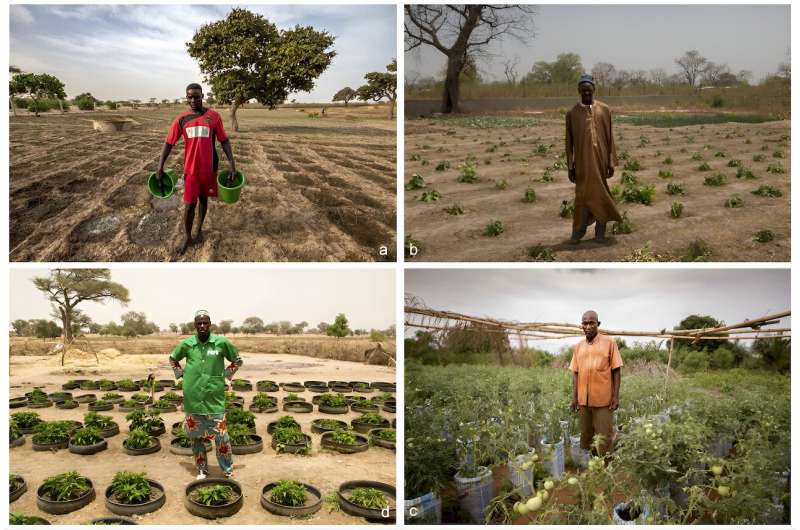
Despite this harsh reality, some farmers have managed to adapt and innovate within this hostile landscape. Yacouba Sawadogo from the village of Gourga is one of them. In a barren field, Yacouba and his family are hard at work, using traditional tools to perforate the crusted soil and prepare it for the approaching rain.
These farmers perform a pattern of vigorous movements, carefully dividing the plot with neat, orderly divots. Each divot is carefully prepared with compost, grains of sorghum, and light soil, providing a sense of hope in these challenging conditions.
