Rolls-Royce has reported to pv magazine that it prefers sustainable air travel fuels (SAF) for large commercial flights, but it continues to purchase hydrogen for mid-size aircraft in partnership with easyJet.
December 4, 2023 Sergio Matalucci
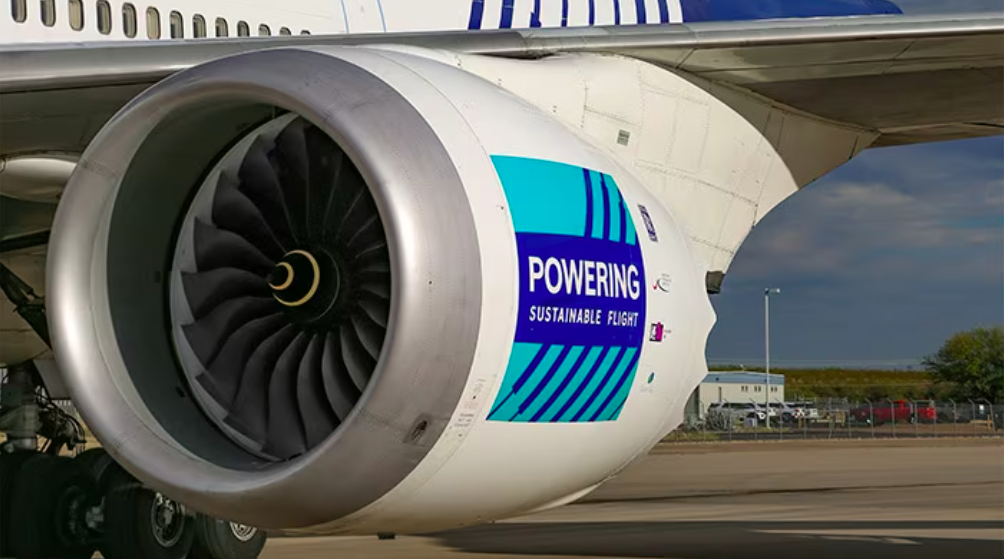
ALECSys flight testing on Boeing 747 Flying Test Bed
Image: Rolls Royce
Rolls-Royce, aiming to divest its electric flight division to focus on improving profits in its jet engine business, indicated that hydrogen is not a medium-term option for widebody, large commercial aircraft, instead opting for Sustainable Aviation Fuel (SAF). “I do not believe in the next 15, 20 years hydrogen will contribute,” commented Rolls-Royce’s CEO Tufan Erginbilgic during the discussion with analysts and investors. The British company collaborated with a number of companies in the hydrogen sector for various projects, from production based on SOEC technology to the ground test of the “world’s first run of a modern aero engine on hydrogen.” The company then explained to pv magazine that the company remains committed to developing its hydrogen capability in collaboration with easyJet. “We ran the world’s first modern aero engine on green hydrogen in 2015; we plan to ground test a higher thrust engine on hydrogen next year; and we still have aspirations to take this technology to flight test in the long term. We are on track to deliver our commitment to power a mid-size aircraft on hydrogen in the mid 2030s in collaboration with easyJet.”
ACWA Power has launched the first phase of a green hydrogen project in Uzbekistan. It has an annual capacity of 3,000 tons. “Once the second phase is complete, 2.4 GW of wind energy will power the production of 500,000 tonnes of green ammonia annually,” stated the Saudi Arabian company.
Lhyfe plans to produce up to 330 tons of green hydrogen per day at its Lubmin plant in northern Germany, with a targeted commissioning date of 2029. “Part of Lhyfe’s foundation development strategy, this plant will feed into the German core hydrogen pipeline network, for the development of which the German government recently announced a EUR20 billion funding plan,” statedthe French company. The project site will have access to existing and future electricity production capacities from offshore wind farms. It benefits from an extra-high voltage grid connection operated by 50Hertz, which already operates a transformer station in Lubmin. The plant will be built on the site of a decommissioned nuclear reactor.
Spain’s Port of València has become the first port in the world to use a stacker capable of moving containers of more than 30 tons using only hydrogen as fuel. “Hydrogen is stored on board the ReachStacker in high-pressure tanks that can be refilled in 10-15 minutes,” stated the port. The port also announced that it deployed the first hydrogen-powered terminal tractor, developed by Atena, Enea, and the Parthenope University of Naples. “This Terminal Tractor has a fuel cell/battery hybrid powertrain,
