As both a campaigner for the rights of marginalized communities and a former parliamentarian, I know too well that progress is not linear, and law reform hurdles are often immense and time consuming.
The escalation of punitive laws and increasing backlash against the LGBTQ community demonstrates the devastating impact of state-sponsored persecution of marginalized people on efforts to tackle diseases like HIV by blocking affected populations from accessing the care we need. Countering this kind of animus, enabling access to care, and dismantling structural barriers require ground-up efforts, led by the very people targeted by discriminatory laws and policies.
In my home country of Nepal, the progress we’ve made from institutionalized discrimination to reform offers both lessons and hope that change is possible. It was less than 20 years ago that members of the police slit a transgender woman’s throat after forcing her to perform oral sex, and days later, dozens of LGBTQ campaigners were detained for weeks without charge. Today, people in that position would have protections that seemed impossible only years ago.
By engaging and supporting marginalized people, activist organizations like Blue Diamond Society, which I founded in 2001, laid the groundwork for Nepal to decriminalize gender and sexual minorities in 2007, and more recently begin moving toward the legalization of gay marriage. As an elected member of Nepal’s Constituent Assembly between 2008-2012, I saw the effectiveness and influence that came from being inside the halls of power. I was able to push through LGBTQ issues and ultimately draft a reformed constitution with equality at its core.
Alongside the evident need for representation of marginalized groups in politics, I urge policymakers to follow these three key principles for the improved rights and health of their people.
First, construct strong legal and policy frameworks. I’ve observed first-hand as a politician and as an activist, the power of laws and policies grounded in human rights to deliver meaningful, positive impacts in the day-to-day lives of LGBTQ people. In 2007, after successful petitioning by Blue Diamond Society, the Supreme Court of Nepal ordered that the government must protect LGBTQ people and change laws that amounted to discrimination. The directives warned the police that harassment would not be accepted and led to a boost in self-confidence for the LGBTQ community.
Second, follow examples of progress. Heeding the advances made by other countries provides a view into what can be achieved when equality and non-discrimination are prioritized on political agendas. South Africa’s pioneering protection of the LGBTQ community was an illustrative case study for activists in Nepal. The provisions on non-discrimination that were enshrined in their constitution offered an exemplar for Nepal to emulate in its own constitution. We hope that the progress made in Nepal—albeit slow at times—may serve as an example of equality and inclusion for other countries.
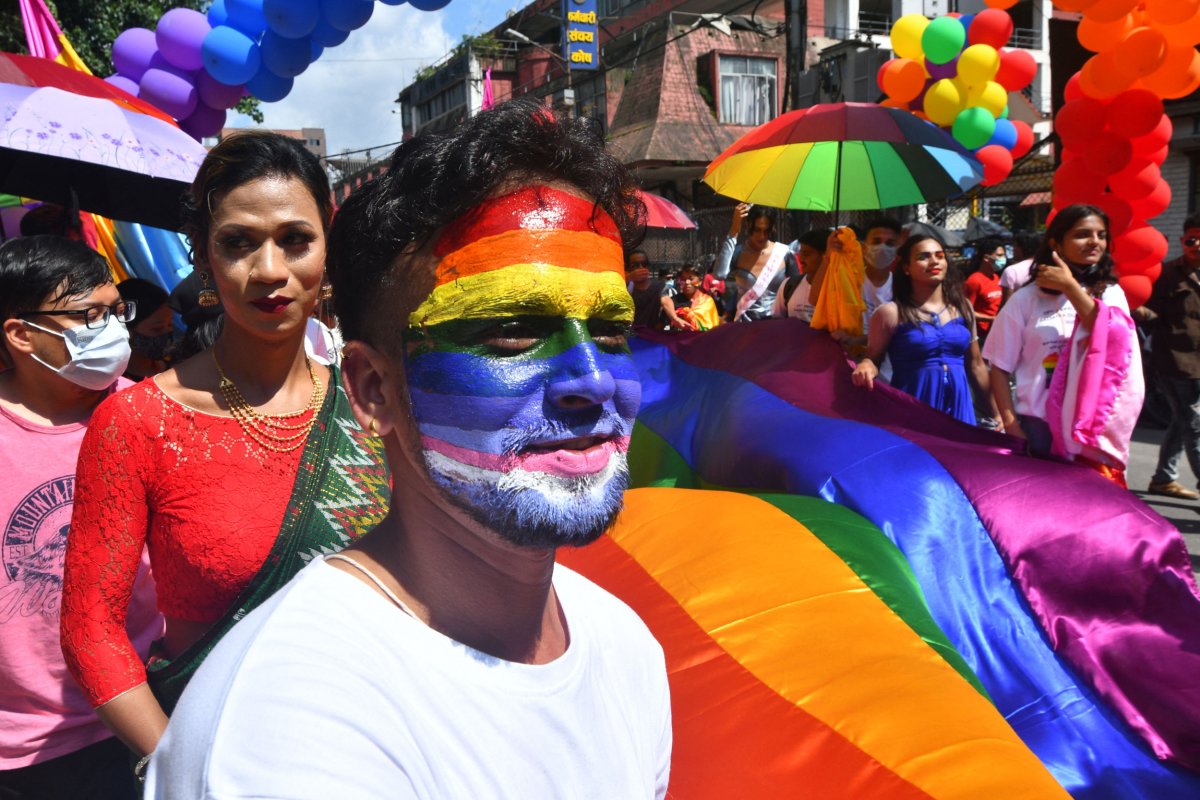
Members of Nepal’s LGBTQ community take part in a pride parade in Kathmandu on Aug. 12, » …
Read More
