Superconductors: A Quantum Mystery
Superconductors have been a source of fascination for physicists for decades. These materials, which enable the perfect, lossless flow of electrons, have primarily operated at extremely low temperatures—just a few degrees above absolute zero—making them impractical for most applications.
However, a recent breakthrough led by Harvard Professor of Physics and Applied Physics Philip Kim demonstrates a new strategy for creating and manipulating higher-temperature superconductors known as cuprates. This paves the way for engineering new, unconventional forms of superconductivity in previously unattainable materials.
Kim’s team reports a groundbreaking development for the world’s first high-temperature superconducting diode in the journal Science. This innovative diode essentially acts as a switch for directing current flow and is made from ultra-thin cuprate crystals using a unique low-temperature fabrication method.
According to Kim, this advancement brings us closer to high-temperature superconducting diodes that do not require the use of magnetic fields, heralding a new era of research into exotic materials and their properties.
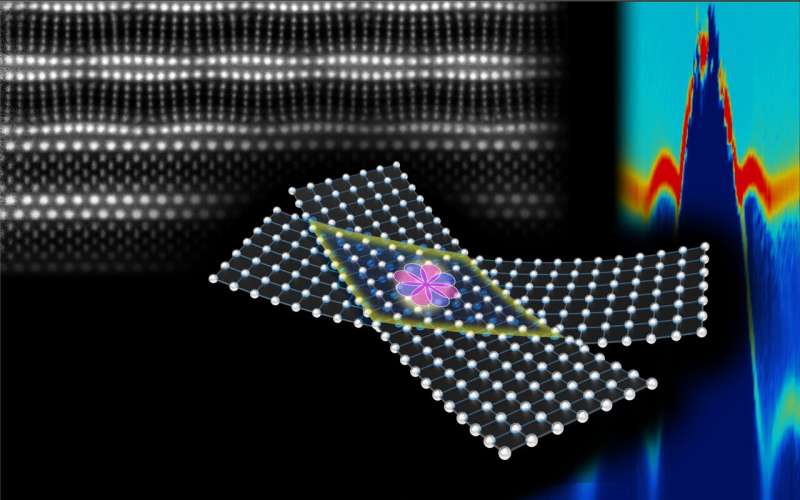
The research team, led by S. Y. Frank Zhao, utilized a specialized cryogenic crystal manipulation method to engineer a clean interface between two extremely thin layers of cuprate bismuth strontium calcium copper oxide, also known as BSCCO (“bisco”).
BSCCO is considered a “high-temperature” superconductor because it exhibits superconducting properties at around -288 Fahrenheit—an astonishingly high temperature compared to conventional superconductors that must be cooled to about -400 Fahrenheit.
The team’s approach involved stacking two layers of BSCCO at a 45-degree twist, which allowed them to observe unique behaviors related to the flow of supercurrents with minimal resistance. Additionally, they demonstrated electronic control over the interfacial quantum state by reversing polarity, resulting in a switchable, high-temperature superconducting diode.
These findings offer a promising foundation for exploring topological phases and quantum states that are resistant to imperfections, potentially leading to the development of advanced computing technologies and quantum bits.
Discover more about this exciting development here.
